

GoFo Denver Hub: Tracking, Delays & What to Do
Quick Answer
If your tracking says your parcel is at the GoFo Denver hub, it has reached GoFo’s Mountain West entry port — the DEN node that sorts parcels for Colorado and the surrounding mountain states. “Arrived at regional hub” is good news: the parcel is being sorted for the next leg, usually to a delivery station near your address, and most parcels clear a hub within a day. If nothing moves for more than 7 days (domestic) or 14 days (international), escalate — retailer first, then GoFo.

What Is the GoFo Denver Hub?
The Denver hub is GoFo Express’s Mountain West regional entry port. Denver (DEN) is one of GoFo’s official entry ports — alongside Atlanta and Dallas/Fort Worth — where freight enters the network and is sorted for onward delivery. The site is a regional entry port, a middle sorting layer between long-distance freight and local depots: it scans, sorts, and cross-docks e-commerce parcels for Mountain West delivery routes.
A “cross-dock” step means parcels are moved from inbound trailers to outbound lanes without being stored — barcode scanners read labels from several angles, capture ZIP codes, weight classes, and service levels, and teams push freight into outbound lanes heading to local delivery stations or nearby state distribution centers.
The Denver site is not a neighbourhood delivery office. Like every GoFo facility, it is a working sorting building, not a public pickup counter: you cannot walk in to collect a parcel, and GoFo does not publish hub street addresses. For a hold, redirect, or investigation, contact GoFo or the seller instead of travelling to the hub.
Which Areas Does the Denver Hub Serve?
The Denver hub anchors GoFo’s Mountain West network: the Colorado Front Range first, then the wider mountain states. Parcels for these areas route through the DEN entry port before moving to a local delivery station.
| Area | What it covers | How parcels get there |
|---|---|---|
| Denver metro / Front Range | Denver, Boulder, Aurora, Lakewood, Fort Collins, Colorado Springs | Sorted at the DEN entry port, then to local delivery stations, often next-day around the metro area |
| Colorado statewide | Mountain towns, western slope, southern Colorado | Sorted at Denver, then linehaul to delivery stations; mountain routes take longer in winter |
| Mountain West | Utah, Wyoming, New Mexico, Montana | Sorted at Denver, then onward to regional delivery stations in each state |
| Longer routes | Parcels heading further west or east | Transferred to another regional hub (for example in California or the Midwest) before final delivery |
If you live outside Colorado, do not worry: Denver is a sorting point, not a destination, and parcels routinely pass through a hub far from their final address.
What Tracking Statuses Mention Denver?
Tracking does not always name the city — many scans just say “regional hub” — but when it does, these are the statuses you will see.
| Status you may see | What it means | What to do |
|---|---|---|
| Arrived at Regional Hub (Denver / DEN) | Your parcel reached the Denver entry port and is being sorted for local delivery. | Nothing. Expect a departure scan next, usually within a day. |
| Departed Facility / Departed Regional Hub | Your parcel left Denver and is heading toward the next facility or delivery station closer to you. | Wait for the next scan. The parcel is moving. |
| In Transit to Destination | Your parcel has left the hub network and is on its way to the local delivery station nearest your address. | Delivery is close — typically 1–3 days from this point for domestic shipments. |
| Arrived at Delivery Station | Your parcel reached the local facility responsible for final delivery to your address — the last stop before it is loaded onto a delivery vehicle. | Expect delivery within 1–2 business days. |
| Arrived at Destination Hub | Your parcel reached the final hub or delivery station in your area. | Expect delivery within 1–2 business days. |
| Held at Facility | Your parcel is being held at a GoFo facility — possibly for an address issue, a customs requirement, or a shipper request. | Contact the retailer to find out why. You cannot collect it in person. |
For the full list of GoFo statuses in plain language, read our tracking statuses explained guide. If your parcel shows “arrived at regional hub” twice, that is also normal — a parcel can legitimately pass through two hubs.
How Long Do Parcels Stay at the Denver Hub?
There is no published timetable for a single hub, because dwell time depends on volume, the day of the week, and where the parcel is going next. As a rule of thumb, most parcels clear a regional hub within a day, and most leave the hub toward a local station within 24 to 48 hours. During peak volume — Black Friday week, the run-up to Christmas — the same step can take 1–3 days, because the sorting lines are running at full capacity and trucks fill up faster than usual.
A parcel at Denver is usually closer to delivery than it looks: next-day delivery around major hubs, three-to-five-day delivery across states and regions, and a delivery station within 1–3 days for domestic parcels. Cross-border parcels take longer overall — 7–25 days per our delivery-time guide — but most of that time is customs and international transport, not the Denver stop.
Weekends and holidays pause the clock too: hub operations slow on Saturdays and Sundays and stop on major holidays, so a parcel arriving Friday afternoon may show nothing new until Monday. Mountain weather can add its own delay — winter storms on the passes between Denver and the mountain towns can stop line-haul trucks, and scans resume when roads reopen. See our weekend and holiday delivery guides.
The number that matters is 7 days. If a domestic parcel shows no movement at all for more than 7 days — no new scan, no departure, nothing — that is the point where waiting stops being the right move. For international shipments, the threshold is 14 days.
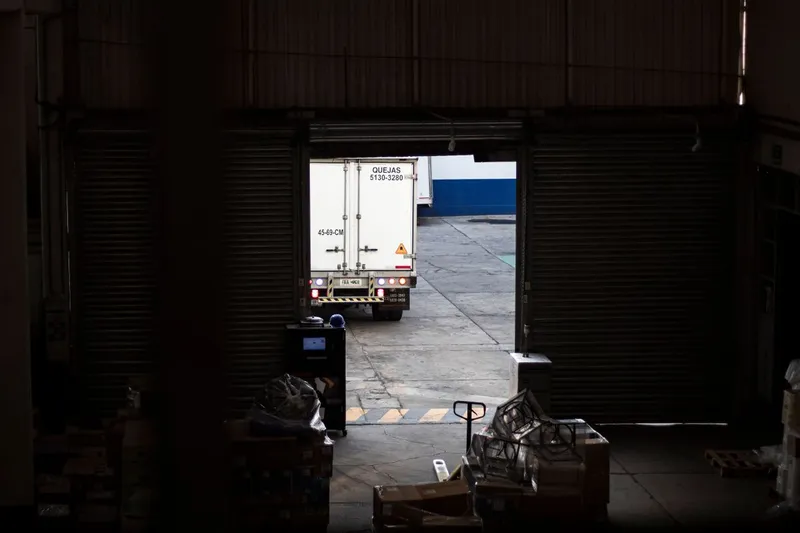
What to Do If Your Parcel Is Stuck at the Denver Hub
Most “stuck at Denver” parcels resolve on their own — work through these steps in order to know when waiting stops being the right move.
1. Check the calendar first. Count business days, not calendar days. A parcel that arrived at Denver on Friday and shows nothing on Monday has only lost one business day. A parcel with no scan since last Tuesday has a real problem.
2. Confirm you are tracking the right number. Entering an order number instead of the tracking number returns no results at all — the most common tracking mistake. GoFo tracking numbers start with letters (usually GFUS for U.S. shipments). Our tracking number format guide shows how to tell the two apart, and our tracking number vs order number guide covers the difference in full.
3. Check the full scan history, not just the headline status. Look for a departure scan, a delivery exception, or a return event you missed, on both our homepage tracker and the official GoFo portal — one can lag behind the other.
4. Wait for the escalation thresholds. If a domestic shipment shows no movement for more than 7 days (14 days international), escalate rather than keep waiting. During peak season, give it the full threshold — a 5-day domestic silence in mid-December is usually congestion, not a lost parcel.
5. Contact the retailer first. GoFo works on behalf of retailers, not shoppers directly, so the retailer’s customer service team is usually the fastest path to a resolution — they can open an investigation with GoFo directly. Have your order number and tracking number ready. See our tracking not updating guide for the same steps.
6. If the parcel is genuinely lost, start a claim. Our claim and refund guide covers the process, deadlines, and evidence you need. If a parcel shows as delivered but you never received it, read our lost package guide before filing.
How to Contact GoFo About a Parcel at Denver
GoFo has two phone lines, and using the right one saves time. The recipient hotline is +1 (949) 688-6032, open Monday to Friday 9AM to 9PM EST and Saturday to Sunday 11AM to 8PM EST. The seller and warehouse line is +1 (626) 505-1101, open daily 9AM to 9PM EST. Have your tracking number, the exact status wording (“arrived at regional hub, Denver”), and the date of the last scan ready — that is what the agent needs to look the parcel up.
Expect longer hold times during peak season. If the seller cannot help and GoFo cannot locate the parcel, the retailer’s claim process is the next step — the hub itself has no public phone line or customer counter. Full details are on our customer service page.
The Denver Hub’s Role in GoFo’s Wider Network
Denver is GoFo’s Mountain West entry port: the node where long-haul freight meets local delivery routes for the whole mountain region. It sits in a network built around three anchor hubs — Newark in the East, Los Angeles in the West, and Dallas (Lewisville, Texas) in the centre — that together let GoFo serve more than 12,000 ZIP codes, about 75% of the U.S. population, across 47 states. GoFo reports 98.5% on-time delivery across that network.
The chain a parcel follows is always the same: seller, then a large distribution facility for broad sorting, then a regional hub such as Denver for metro-area sorting, then a delivery station for local sorting, then out with a driver. Our distribution facility guide and delivery station guide explain the other two steps. GoFo built this network fast — founded in 2023, headquartered in Los Angeles — and the Denver entry port is the node the whole Mountain West operation is built around.
Related guides: the Seattle hub and the Phoenix hub.
Frequently Asked Questions
Q: My parcel says “arrived at regional hub” in Denver. Is it stuck?
Almost certainly not — it means the parcel is being sorted for the next leg, and most leave within a day. Treat it as stuck only after 7 days with no new scan (domestic) or 14 days (international).
Q: Can I go to the Denver hub to pick up my parcel?
No. The Denver hub is a working sorting building, not a public pickup counter, and GoFo does not publish hub street addresses for public visits. Contact the retailer or GoFo if you need the parcel held, redirected, or investigated.
Q: Why does my tracking show Denver when I live in another state?
Denver is a sorting point, not a destination. Parcels are sorted where they enter the network, then transferred onward — a parcel heading for the Midwest or the East may be sorted at a Mountain West node first. It is still headed to your address.
Q: Does GOFO deliver on weekends in Colorado?
Yes — contracted delivery partners handle residential deliveries in major metro areas, including weekends. Hub operations still slow on weekends, so a parcel can sit quietly over a Saturday and Sunday before moving again on Monday.
Q: My parcel has been at Denver for 10 days with no update. What now?
That is past the 7-day domestic threshold. Contact the retailer first — they can open an investigation with GoFo — and have your order and tracking numbers ready. If the parcel is confirmed lost, use our claim and refund guide.
Final Thoughts
Seeing “Denver” in your tracking is seeing GoFo’s network at its mountain gateway: the DEN entry port that links long-haul freight to final-mile delivery across the Mountain West. For most parcels it is a one-day stop — a day or two of silence at a hub is normal, a week is not. Check the full scan history, count business days, and escalate through the retailer once the 7-day (domestic) or 14-day (international) threshold passes.
GoFo Tracking is an independent tracking assistance tool and is not affiliated with, endorsed by, or connected to GOFO Express.