

GoFo Arrived at Regional Hub: Meaning, Time & Next Steps
Quick Answer
If your tracking says your parcel has arrived at a regional hub, it has reached one of GoFo’s large sorting centres — Newark, Vernon, Melrose Park, or another hub — and is being sorted by delivery zone for the next leg. It is good news: the parcel is in the network and moving forward. Most parcels clear a hub within a day. It only becomes a problem when nothing moves for more than 7 days (domestic) or 14 days (international).
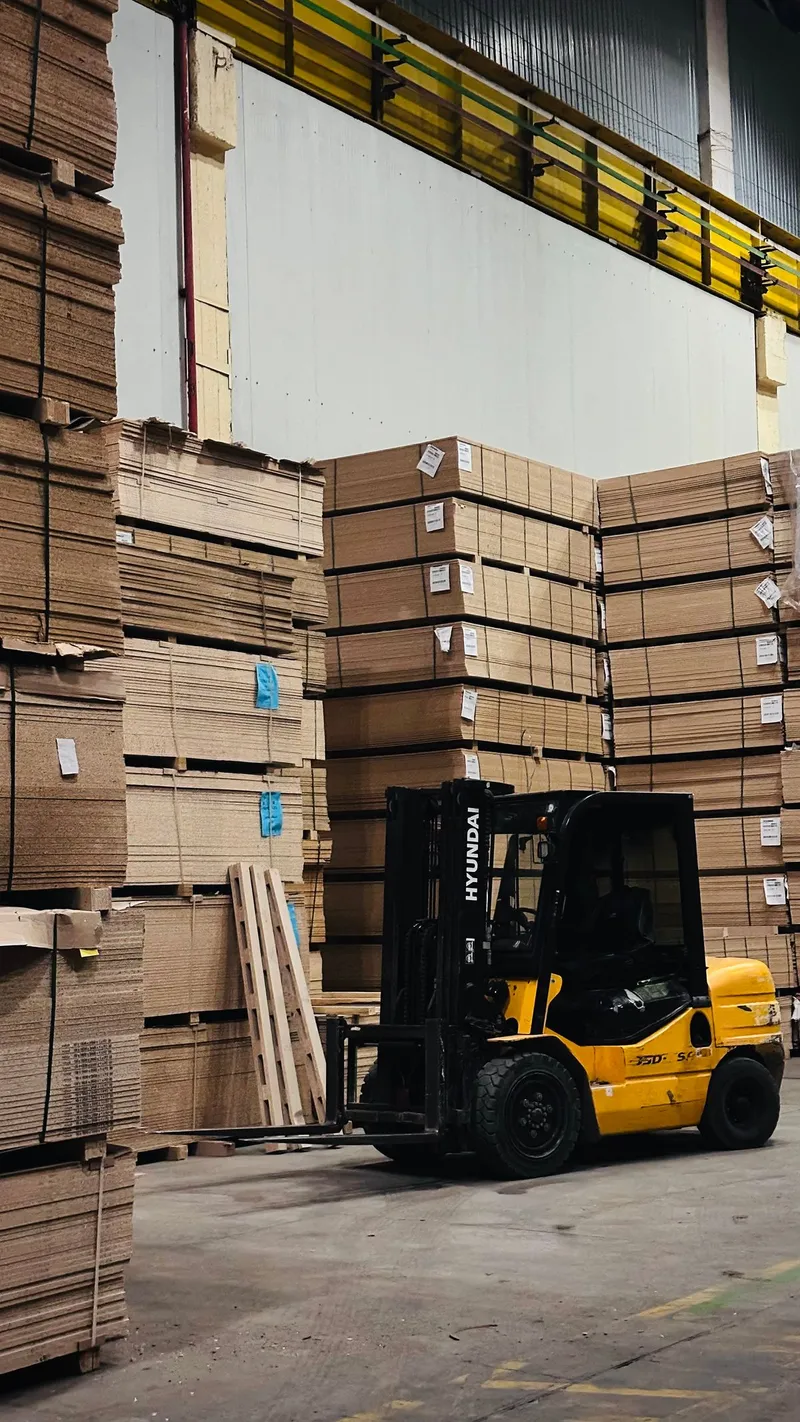
What Does “Arrived at Regional Hub” Mean on GoFo Tracking?
A regional hub is GoFo’s metro-area sorting centre. Parcels arrive there in bulk from ports, airports, distribution facilities, and other cities, and are sorted by delivery zone onto trucks heading for the next hub or the delivery station near your address. “Arrived at regional hub” is the scan that says your parcel has reached one of these centres and is being processed for the next leg.
GoFo’s own statuses guide defines the matching status, “Arrived at Sorting Facility”, exactly that way: the package reached one of GoFo’s 300+ hubs or sorting stations and is being processed for the next leg of its journey. The guide adds two things worth knowing. First, this is normal forward movement — nothing to do. Second, you may see this status multiple times as the package moves through different facilities. A parcel that arrives at two hubs is not going backwards; it is being sorted twice on its way to you.
The hub your parcel is at depends on where it entered the network and where it is going. GoFo’s network has three anchors — Newark in the East, Los Angeles in the West, and Dallas in the centre — plus regional hubs such as Vernon, Melrose Park, Chino, Carteret, Jamaica NY, Atlanta, and Milford CT. The scan usually names the city, so you can tell which one your parcel is at.
Which Regional Hub Is Your Parcel At?
The scan wording usually names the hub. If it does, here is what that hub is.
| Hub | Where it is | What it anchors |
|---|---|---|
| Newark | Newark, New Jersey | East Coast — GoFo’s first and largest U.S. super hub (800,000 sq ft, 100,000 parcels/hour after the 2026 expansion) |
| Carteret | Carteret, New Jersey | East Coast sorting alongside Newark, serving the New York/New Jersey corridor |
| Vernon | Vernon, California (Los Angeles area) | West Coast — the main LA-area sorting building, near the Ports of LA/Long Beach |
| Melrose Park | Melrose Park, Illinois (Chicago area) | Midwest — the Chicago metro hub, ~12 miles west of the city |
| Chino | Chino, California | Inland Southern California, paired with Vernon |
| Atlanta | Atlanta, Georgia | Southeast coverage |
| Jamaica, NY | Near JFK, New York | Fast import-to-delivery handoffs for the New York area |
| Milford, CT | Milford, Connecticut | Local last-mile station for New England |
If the scan does not name a city — it may just say “regional hub” — look at the scan before it. A departure from a port points to a coastal hub; a departure from another hub points to the next one along the route. Our hub pages explain each one in detail: Newark, Vernon, Melrose Park, Seattle, Phoenix, Denver, Charlotte, Cleveland, Indianapolis, and Baltimore.
Do not worry if the hub is far from your address. A hub is a sorting point, not a destination — parcels are sorted where they enter the network, then transferred onward. A parcel heading for the Midwest can legitimately be sorted at Newark first. It is still headed to your address.
How Long Do Parcels Stay at a Regional Hub?
GoFo does not publish a fixed dwell time for a regional hub, because it depends on volume, the day of the week, and where the parcel is going next. As a rule of thumb, most parcels clear a regional hub within a day. During peak volume — Black Friday week, the run-up to Christmas — the same step can take 1–3 days, because the sorting lines are running at full capacity and trucks fill up faster than usual.
What matters more than the hub stop itself is the whole journey: domestic 1–15 days (short-haul 1–5) and cross-border 7–25 days (median 10). A day at a hub is a small part of either window — the hub stop only matters if the parcel does not leave.
| Timing | What usually happens |
|---|---|
| Normal day | Parcel sorted and dispatched within a day — next scan is a departure |
| Peak season | Sorting lines at full capacity; the parcel may wait 1–3 days |
| Weekend arrival | Slower operations; a Friday arrival may not move until Monday |
| More than 7 days | No longer normal for a domestic parcel — escalate (see below) |
Weekends and holidays pause the clock too: hub operations slow on Saturdays and Sundays and stop on major holidays, so a parcel arriving Friday afternoon may show nothing new until Monday. See our weekend and holiday delivery guides.
The number that matters is 7 days. If a domestic parcel shows no movement at all for more than 7 days — no new scan, no departure, nothing — that is the point where waiting stops being the right move. For international shipments, the threshold is 14 days. Those are GoFo’s own escalation thresholds. Our delivery-time guide covers the overall windows.
“Arrived at Regional Hub” vs the Neighbouring Statuses
This status is the arrival half of a pair — the departure is the other half. Here is how it sits among the statuses around it.
| Status | What it means | How it differs |
|---|---|---|
| In Transit | Parcel moving between facilities | The stretch before the arrival — 1–7 days |
| Arrived at Sorting Facility | Parcel reached a hub and is being processed | The same step, worded by facility type |
| Arrived at Regional Hub | Parcel reached a regional sorting centre | The arrival — the parcel is at the hub, being sorted |
| Departed Regional Hub | Parcel left the hub for the next facility | The departure — sorting done, parcel moving again |
| In Transit to Destination | Parcel left the hub network for the local station | The final leg — typically 1–3 days to the station |
| Arrived at Delivery Station | Parcel reached the local facility | The last stop — delivery in 1–2 business days |
The practical difference: an arrival means the parcel is somewhere, a departure means it is moving, and “in transit” is the time between the two. If your parcel arrived at a hub yesterday, the next thing to look for is a departure scan — that is the sign it is moving again.
For the full list of GoFo statuses in plain language, read our tracking statuses explained guide.
What to Do If Your Parcel Is Stuck at a Regional Hub
Most parcels leave the hub within a day — work through these steps in order to know when waiting stops being the right move.
1. Check the calendar first. Count business days, not calendar days. A parcel that arrived at a hub on Friday and shows nothing on Monday has only lost one business day. A parcel with no scan since last Tuesday has a real problem.
2. Check the full scan history, not just the headline status. Look for a departure scan, a delivery exception, a “held at facility” scan, or a return event you missed, on both our homepage tracker and the official GoFo portal — one can lag behind the other. A hold usually means an address issue, a customs requirement, or a shipper request.
3. Confirm you are tracking the right number. Entering an order number instead of the tracking number returns no results at all — the most common tracking mistake. GoFo tracking numbers start with letters (usually GFUS for U.S. shipments). Our tracking number format guide shows how to tell the two apart, and our tracking number vs order number guide covers the difference in full.
4. Wait for the escalation thresholds. If a domestic shipment shows no movement for more than 7 days (14 days international), escalate rather than keep waiting. During peak season, give it the full threshold — a 5-day domestic silence in mid-December is usually congestion, not a lost parcel. See our tracking not updating guide for the same steps.
5. Contact the retailer first. GoFo works on behalf of retailers, not shoppers directly, so the retailer’s customer service team is usually the fastest path to a resolution — they can open an investigation with GoFo directly. Have your order number and tracking number ready.
6. If the parcel is genuinely lost, start a claim. Our claim and refund guide covers the process, deadlines, and evidence you need. If a parcel shows as delivered but you never received it, read our lost package guide before filing.
How to Contact GoFo About a Parcel at a Regional Hub
GoFo has two phone lines, and using the right one saves time. The recipient hotline is +1 (949) 688-6032, open Monday to Friday 9AM to 9PM EST and Saturday to Sunday 11AM to 8PM EST. The seller and warehouse line is +1 (626) 505-1101, open daily 9AM to 9PM EST. Have your tracking number, the name of the hub (from the scan wording), and the date of the last scan ready — that is what the agent needs to look the parcel up.
Do not travel to the hub: it is a working sorting building, not a public pickup counter, and GoFo does not publish hub street addresses. Full details are on our customer service page.
Frequently Asked Questions
Q: My parcel arrived at a regional hub three days ago and nothing has happened. Is it stuck?
Probably not — most parcels clear a hub within a day, but 1–3 days is normal at peak volume or over a weekend. Treat it as stuck only after 7 days with no new scan (domestic) or 14 days (international).
Q: Why does my tracking show “arrived at regional hub” twice?
Because the parcel passed through two hubs. GoFo’s own guide says this status can appear multiple times as a parcel moves through different facilities — it is normal forward movement, not a mistake.
Q: Can I go to the regional hub to pick up my parcel?
No. The hub is a working sorting building, not a public pickup counter, and GoFo does not publish hub street addresses. Contact the retailer or GoFo if you need the parcel held, redirected, or investigated.
Q: My parcel is at a hub in a state I do not live in. Is that a mistake?
No. Hubs are sorting points, not destinations — parcels are sorted where they enter the network, then transferred onward. A parcel heading for the Midwest can legitimately be sorted at Newark first.
Q: What comes after “arrived at regional hub”?
A departure scan — “departed regional hub” — then “in transit”, and eventually an arrival at the next facility. If the parcel is on its final leg, the next statuses are “in transit to destination” and “arrived at delivery station”.
Q: My parcel has been at the hub for 10 days. What now?
That is past the 7-day domestic threshold. Contact the retailer first — they can open an investigation with GoFo — and have your order and tracking numbers ready. If the parcel is confirmed lost, use our claim and refund guide.
Final Thoughts
“Arrived at Regional Hub” is the status that says your parcel is in the machine and the machine is working: it reached a big sorting centre and is being sent on its way. Most parcels leave within a day, a few take 1–3 days at peak, and seeing the status twice just means the parcel passed through two hubs.
GoFo Tracking is an independent tracking assistance tool and is not affiliated with, endorsed by, or connected to GOFO Express.