

GoFo Departed Regional Hub: What It Means & Next Steps
Quick Answer
If your tracking says your parcel has departed the regional hub, it has left the sorting facility and is on its way to the next stop — another hub, or the delivery station near your address. It is a good status: the parcel finished sorting and is moving again. What comes next is usually “in transit” and then an arrival scan at the next facility. It only becomes a problem when nothing changes for more than 7 days (domestic) or 14 days (international).

What Does “Departed Regional Hub” Mean on GoFo Tracking?
A regional hub is GoFo’s metro-area sorting centre — Newark for the Northeast, Vernon for Los Angeles, Melrose Park for Chicago, and others across the network. Parcels arrive there in bulk, get sorted by delivery zone, and leave on trucks for the next facility. “Departed regional hub” is the scan that says the sorting is done and the parcel is back on the road.
GoFo’s own statuses guide defines the matching status, “Departed Sorting Facility”, exactly that way: the package left the sorting facility and is on its way to the next hub or to the final delivery station near you. The advice attached to it is short — wait for the next scan, the package is moving — because a departure is, by definition, forward movement.
It is worth understanding what a departure does not tell you. The scan does not name the destination. It does not say which facility the parcel is heading for, or how long the leg will take. The next scan — an arrival somewhere — is what reveals where the parcel went. Until then, all you know is that it left the hub and is in motion.
Where Is Your Parcel Heading After It Departs a Hub?
It depends on where the parcel is in its journey. A parcel can leave a regional hub for two kinds of destination, and the scan history tells you which.
| Where the parcel is in its journey | Where it goes next | What scan comes next |
|---|---|---|
| Early in the journey | Another regional hub, closer to your address | “Arrived at Sorting Facility” or “Arrived at Regional Hub” at the next hub |
| Mid-journey | A transfer point or a linehaul route across regions | “In Transit” until the next facility scan |
| Late in the journey | The delivery station nearest your address | “In Transit to Destination”, then “Arrived at Delivery Station” |
| Final leg | The delivery station, then a driver’s route | “Arrived at Destination Hub” — delivery in 1–2 business days |
Look at the scan before the departure to tell which case yours is. If the parcel arrived at the hub from a port or a distribution facility, it is early in the journey and another hub is likely next. If it arrived at the hub from another hub and your address is in the same region, the delivery station is likely next — and the status after that is usually “in transit to destination”, which GoFo’s guide says means 1–3 days to the station for domestic shipments.
Parcels can also pass through more than one hub. GoFo’s own guide notes that “arrived at sorting facility” can appear multiple times as a parcel moves through different facilities, and the same is true of departures. Seeing two “departed regional hub” scans is normal — it means the parcel changed hubs on its way to you, not that it went backwards.
How Long Until the Next Scan?
The gap after a departure is the “in transit” stretch, and GoFo’s own guide puts it at 1–7 days depending on the distance. A short hop between two hubs in the same metro area can produce a new scan within a day. A linehaul leg across the country can take most of a week. Cross-border parcels can show even longer stretches during international transport.
| Next leg | Typical gap to the next scan |
|---|---|
| Short hop to a nearby hub or station | Within a day |
| Regional transfer | 1–3 days |
| Cross-country linehaul | 3–7 days |
| Cross-border leg | Longer — part of the 7–25 day CBT window |
| Peak season or weekend | Add 1–3 days to the above |
The tracking updates lag real-time movement by a few hours, and weekend scans are less frequent, so a departure on a Friday afternoon may not be followed by anything until Monday. That is two days of silence that mean nothing. Our weekend delivery guide covers the same pattern.
The number that matters is 7 days. If a domestic parcel shows no movement at all for more than 7 days after departing a hub — no new scan, no arrival, nothing — that is the point where waiting stops being the right move. For international shipments, the threshold is 14 days. Those are GoFo’s own escalation thresholds, and they apply to the whole journey, including the stretch after a departure. Our delivery-time guide covers the overall windows: domestic 1–15 days, cross-border 7–25 days (median 10).
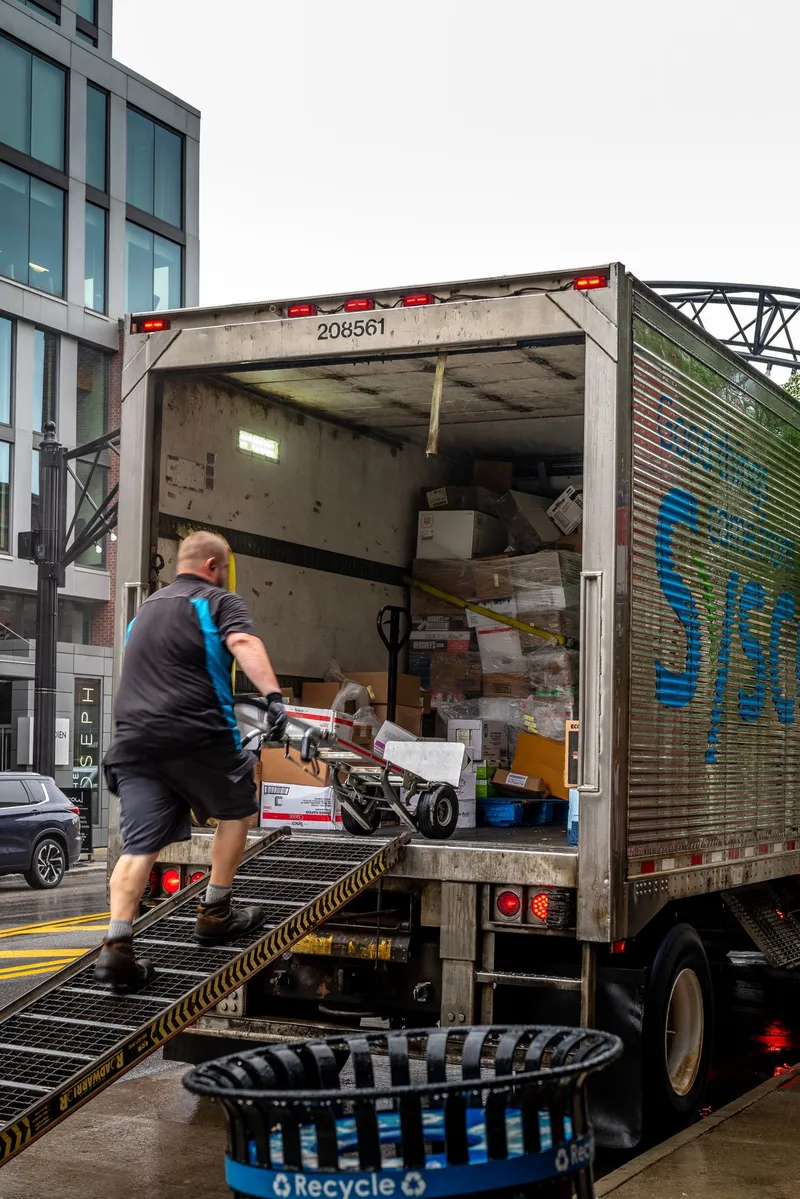
“Departed Regional Hub” vs the Neighbouring Statuses
A departure is a moment between two longer stretches. Here is how it sits among the statuses around it.
| Status | What it means | How it differs |
|---|---|---|
| Arrived at Sorting Facility | Parcel reached a hub and is being processed | The arrival — the parcel is at the hub, being sorted |
| Arrived at Regional Hub | Parcel reached a regional sorting centre | The same step, named by facility tier |
| Departed Regional Hub | Parcel left the hub for the next facility | The departure — sorting done, parcel moving again |
| In Transit | Parcel moving between facilities | The stretch after the departure — 1–7 days |
| In Transit to Destination | Parcel left the hub network for the local station | The final leg — typically 1–3 days to the station |
| Arrived at Delivery Station | Parcel reached the local facility | The next arrival — delivery in 1–2 business days |
The practical difference: an arrival means the parcel is somewhere, a departure means it is moving, and “in transit” is the time between the two. If your parcel departed a hub yesterday, it is in the “in transit” stretch now — and that stretch is the longest normal part of the journey.
For the full list of GoFo statuses in plain language, read our tracking statuses explained guide.
What to Do If Nothing Happens After a Departure
Most departures are followed by a new scan within a few days — work through these steps in order to know when waiting stops being the right move.
1. Check the calendar first. Count business days, not calendar days. A parcel that departed a hub on Friday and shows nothing on Monday has only lost one business day. A parcel with no scan since last Tuesday has a real problem.
2. Check the full scan history. Look at where the parcel was before the departure — which hub, and how far along the journey it is. A departure from a hub far from your address means more travel ahead; a departure from a hub near your address means the delivery station is next. Check both our homepage tracker and the official GoFo portal — one can lag behind the other.
3. Confirm you are tracking the right number. Entering an order number instead of the tracking number returns no results at all — the most common tracking mistake. GoFo tracking numbers start with letters (usually GFUS for U.S. shipments). Our tracking number format guide shows how to tell the two apart, and our tracking number vs order number guide covers the difference in full.
4. Wait for the escalation thresholds. If a domestic shipment shows no movement for more than 7 days (14 days international), escalate rather than keep waiting. During peak season, give it the full threshold — a 5-day domestic silence in mid-December is usually congestion, not a lost parcel. See our tracking not updating guide for the same steps.
5. Contact the retailer first. GoFo works on behalf of retailers, not shoppers directly, so the retailer’s customer service team is usually the fastest path to a resolution — they can open an investigation with GoFo directly. Have your order number and tracking number ready.
6. If the parcel is genuinely lost, start a claim. Our claim and refund guide covers the process, deadlines, and evidence you need. If a parcel shows as delivered but you never received it, read our lost package guide before filing.
How to Contact GoFo About a Parcel That Departed a Hub
GoFo has two phone lines, and using the right one saves time. The recipient hotline is +1 (949) 688-6032, open Monday to Friday 9AM to 9PM EST and Saturday to Sunday 11AM to 8PM EST. The seller and warehouse line is +1 (626) 505-1101, open daily 9AM to 9PM EST. Have your tracking number, the name of the hub the parcel departed, the date of the departure scan, and the last facility named in the scan history ready — that is what the agent needs to look the parcel up.
Our hub pages can help you place the departure: Newark, Vernon, Melrose Park, Seattle, Phoenix, Denver, Charlotte, Cleveland, Indianapolis, and Baltimore. Full details are on our customer service page.
Frequently Asked Questions
Q: My parcel departed the regional hub three days ago and nothing has happened. Is it lost?
Almost certainly not. The stretch after a departure is “in transit”, which GoFo’s own guide says can last 1–7 days depending on distance. Treat it as a problem only after 7 days with no new scan (domestic) or 14 days (international).
Q: Does “departed regional hub” mean my parcel is close to delivery?
Not necessarily — it depends on which hub. If the parcel departed a hub near your address, the delivery station is next and delivery is close. If it departed a hub far from your address, another hub is next. Check the scan history to see where the parcel was.
Q: Why does my tracking show “departed regional hub” twice?
Because the parcel passed through two hubs. A parcel can legitimately be sorted at more than one regional hub on its way to you — each departure is a real step, not a mistake.
Q: What comes after “departed regional hub”?
Usually “in transit”, then an arrival scan at the next facility — another hub, or the delivery station. If the parcel is on its final leg, the next statuses are “in transit to destination” and “arrived at delivery station”.
Q: My parcel departed the hub and then went back to “arrived at regional hub”. Did it go backwards?
Sometimes scans arrive out of order, or the parcel was routed through a second hub. What matters is the latest scan and its date, not the order the page lists them in. If the latest scan is recent, the parcel is moving.
Q: How do I know which hub my parcel departed?
The scan usually names the city — Newark, Vernon, Melrose Park, and so on. If it does not name one, the scan before it (the arrival) usually does. Our hub pages explain what each hub does.
Final Thoughts
“Departed Regional Hub” is one of the most reassuring statuses you can see: it means the parcel finished sorting and is moving again. The silence after a departure is normal — it is the “in transit” stretch, and GoFo’s own range for it is 1–7 days. Count business days, check the scan history to see where the parcel was, and escalate through the retailer only once the 7-day (domestic) or 14-day (international) threshold passes with no new scan.
GoFo Tracking is an independent tracking assistance tool and is not affiliated with, endorsed by, or connected to GOFO Express.